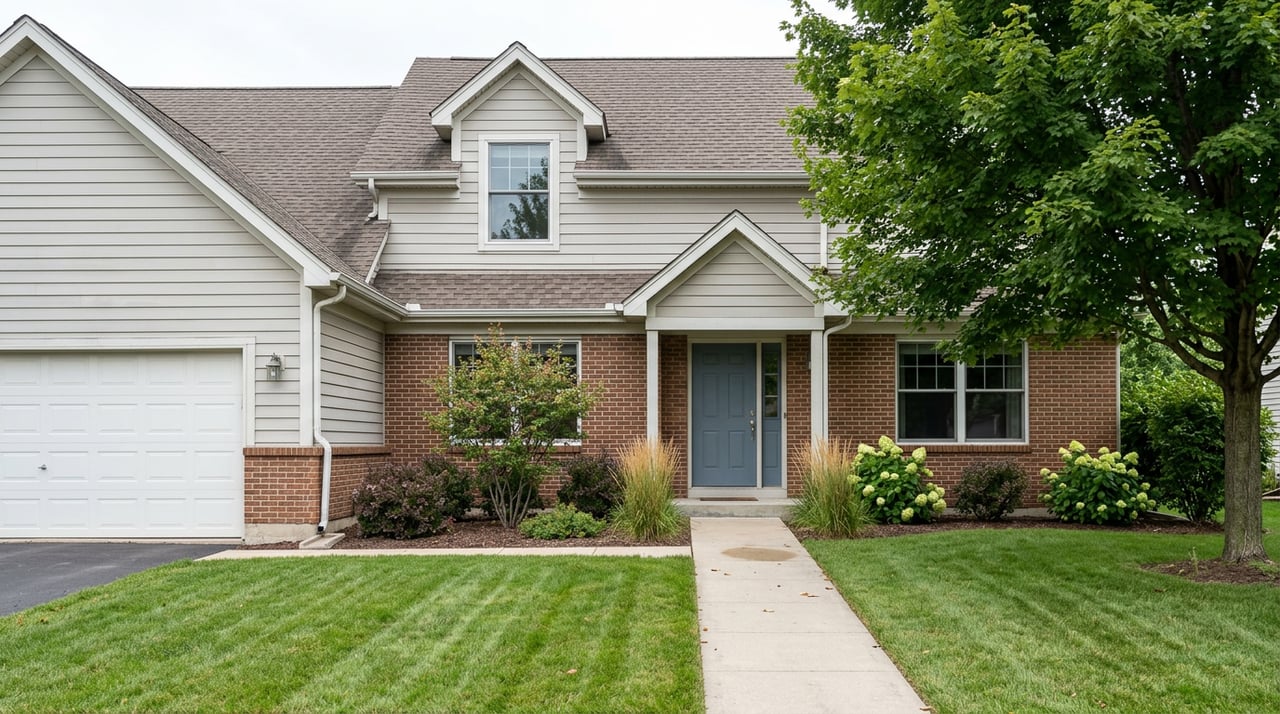
What the Maplewood Truth-in-Housing Report Actually Requires (And What It Doesn't)
August 13, 2026
August 13, 2026
A Maplewood homeowner calls her agent the week after the sign goes in the yard, confused. A neighbor two blocks over, who sold in Minneapolis last spring, warned her to brace for a punch list: a licensed evaluator would walk through, flag a dozen things, and she'd be stuck paying a contractor before anyone could even schedule a showing. So she wants to know how bad it's going to get.
It won't. Not the way she thinks.
Maplewood's Truth-in-Sale of Housing program, the same three-letter acronym her neighbor dealt with in Minneapolis, works on a fundamentally different premise. The City of Maplewood's own ordinance requires a licensed evaluator to inspect the home and produce a report before it can be shown to a single prospective buyer. But nothing on that report has to be fixed for the sale to close. Maplewood's Truth in Housing FAQ states it plainly: the owner is only required to disclose, not fix, any items. That single sentence is worth more to a Maplewood seller than almost anything else in the ordinance, because it means the leverage in the transaction stays with the seller in a way it doesn't twelve miles west.
The Maplewood report isn't a home inspection in the sense most buyers expect from a private inspector hired after an accepted offer. It's closer to a sworn statement. A city-licensed evaluator walks the property and notes visible conditions, and the owner attaches a signed statement covering things a walkthrough can't catch: any known flooding or sewer backup history, chronic water seepage, pending housing orders from the city, whether the property carries a homestead classification, deed restrictions or covenants, and whether the lot falls under Maplewood's shoreland, floodplain, or pipeline ordinances. That combination of physical observation and legal disclosure is what gets displayed at the property and handed to the buyer before any purchase agreement is signed.
None of it obligates the seller to spend a dollar on repairs. The report exists so the buyer walks in with eyes open, not so the city can force a renovation before closing.
This is where sellers get tripped up by advice from friends who sold somewhere else in the metro. The three cities closest to Maplewood run the same basic program under three different sets of teeth.
| City | What the report requires | Mandatory repairs | Report validity |
|---|---|---|---|
| Minneapolis | Evaluation plus a repair checklist | Required repairs generally must be completed, or the buyer signs a form accepting responsibility, per the city's TISH program | Two years or one sale |
| Saint Paul | Disclosure-only report | Only a functioning hard-wired smoke detector is mandatory, per Saint Paul's ordinance | One year |
| Maplewood | Disclosure-only report, mirroring Saint Paul | Owner discloses, does not fix, per city guidance | One year or one owner |
Minneapolis treats the report as an enforcement tool. Saint Paul and Maplewood treat it as a paper trail. A seller who assumes Maplewood works like Minneapolis will often over-prepare, quoting contractors for work the city was never going to require. A buyer who assumes Maplewood works like Minneapolis will sometimes assume flagged items get resolved automatically. Neither assumption holds. The report says what it sees. What happens next is a private negotiation between buyer and seller, not a city mandate.
Here's the part that catches even careful sellers off guard. Maplewood doesn't train or certify its own pool of Truth-in-Housing evaluators. To become licensed in Maplewood, an evaluator has to already hold a valid Truth-in-Housing evaluator license from either Minneapolis or Saint Paul first. Maplewood's own licensing page lists it as the top requirement: a copy of a current St. Paul or Minneapolis evaluator license, plus proof of insurance naming the City of Maplewood as certificate holder.
Practically, that means the evaluator pool available to you in Maplewood is a subset of the same people already doing this work in Minneapolis and Saint Paul, and it shrinks or grows depending on how many of them bother to carry the Maplewood credential on top of their primary city license. It also means you're on your own to schedule. Maplewood's ordinance is explicit that property owners must call the evaluator directly, each one sets an independent fee, and the city assesses its own separate licensing and report-filing charge on top of whatever the evaluator quotes you. There's no city-run intake line matching you to the next available inspector. If the person your neighbor used last year hasn't renewed both licenses this cycle, they're not eligible to do yours, and you won't necessarily find that out until you've already called them.
The ordinance requires the completed report to be on display at the property before the home can be shown to prospective buyers, not just before closing. That's a different sequencing problem than most sellers plan for. If the yard sign goes up before the evaluation is scheduled, showings can be delayed while you wait for an available evaluator, and availability varies by season and by how many of Maplewood's cross-licensed evaluators are currently taking new work.
The report itself is valid for one year or for one ownership period, whichever comes first, so a seller who already has a report from a prior attempt to sell within that window may not need a new one. One caveat worth knowing: Maplewood's community development director can require a fresh inspection if there's evidence of substandard maintenance or new damage since the last one was filed, even within that one-year window. It's not automatic, but it's a real discretionary check, and it's another reason to schedule the evaluation early enough to leave room for a second look if something changes between report and closing.
A few property types fall outside the requirement entirely. Manufactured homes are explicitly excluded from Maplewood's definition of a housing unit for TISH purposes. Attached housing units built for single-family occupancy, which covers most townhomes in the city, do require the evaluation. If you're unsure which bucket your property falls into, that's a five-minute question for the city's building inspection staff before you spend money scheduling anything.
Does a flagged item on the report kill my sale? No. Since the report is disclosure-only, a flagged item becomes information the buyer has before making an offer, not a repair the city compels. What happens with it, whether the buyer asks for a credit, a price adjustment, or nothing at all, is negotiated the same way any other inspection finding gets negotiated.
Can I use a Minneapolis or Saint Paul evaluator directly for my Maplewood sale? Only if that evaluator has also gone through Maplewood's separate licensing process. Holding a Minneapolis or Saint Paul license is the prerequisite, not the finish line. Ask specifically whether they carry current Maplewood licensure before you book.
Does this replace a private home inspection for the buyer? No. The Truth-in-Housing report reflects what a city-licensed evaluator observed at one point in time. Buyers routinely order their own private inspection in addition, and nothing in Maplewood's ordinance discourages that.
Selling in Maplewood means working with a rulebook that rewards sellers who understand exactly where the leverage sits, and the biggest mistake is importing assumptions from a different city's version of the same acronym. If you're getting ready to list and want someone who's tracked these distinctions across every city in the east metro, Gary L Bredeson has been through this process with Maplewood sellers before. Let's connect. Call or email Gary today, before the sign goes in the yard, so the timeline works in your favor from the start.
Stay up to date on the latest real estate trends.



With nearly two decades helping clients in White Bear Lake and the Twin Cities, I know the local market inside and out. Whether you’re buying your first home or selling your last, I’ll put my knowledge and dedication to work to help you achieve the best outcome. Let’s start your journey today.